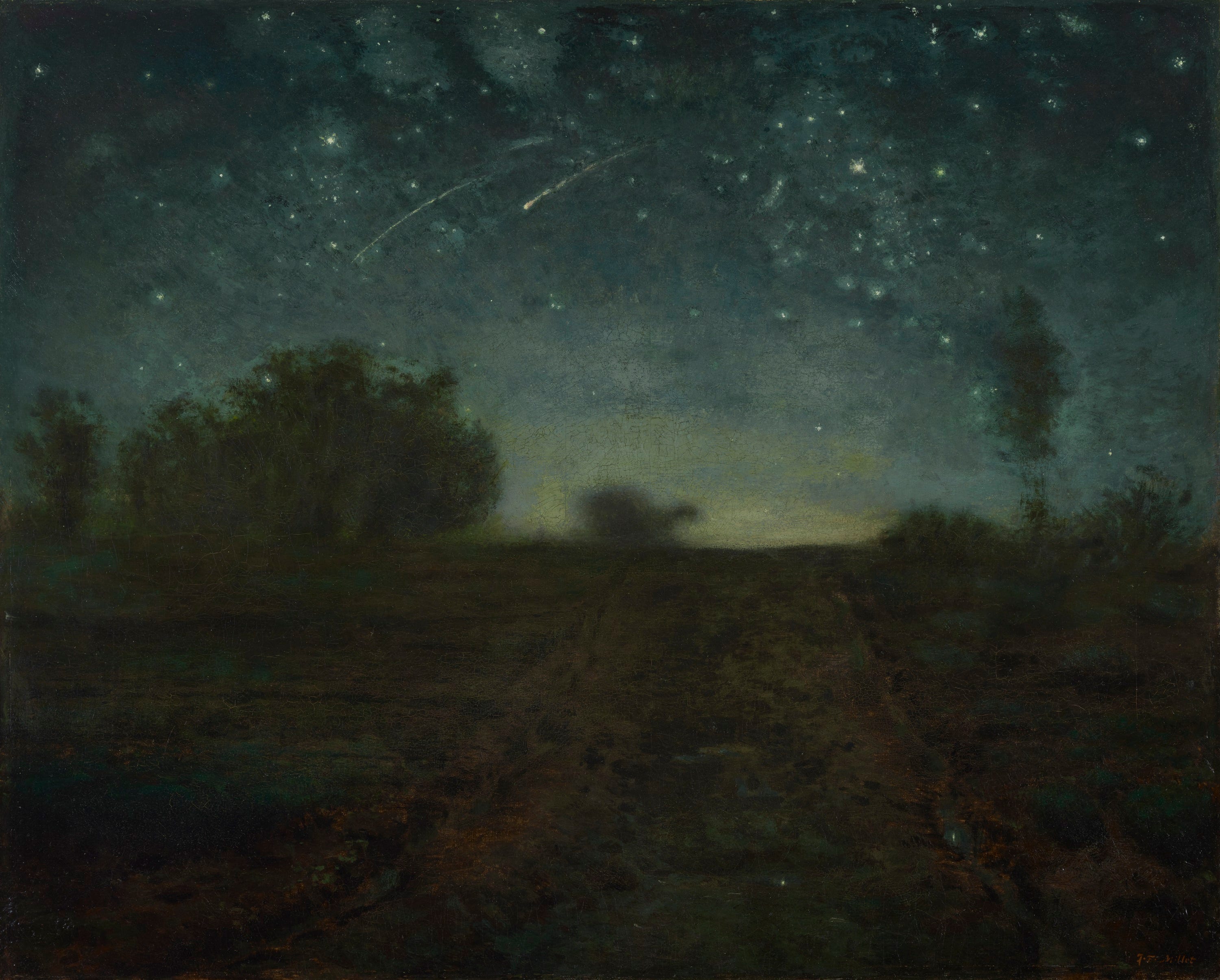
Everbeloved
A short story

Awakening from a deep sleep, I found myself flanked by a sprawling landscape, strewn with valleys and hills, that all seemed to gently throb and shift expressions in the morning light. Something was oddly familiar about it all… What was it?
As that enormity wedged everdeeper into my mind, I began to wonder whether I was still dreaming until, turning to my left, I found my guide standing patiently by my side.
“Where are we?” I asked groggily, propping myself up.
He looked down at me with such tenderness that I forgot I was being looked down upon, instead remembering that I looked up, heavenward. Drawn to his light like a moth taking flight, I rose and, without a word, ahead he went, and so I followed.
We traversed an undulation of wrinkles and pores. Curious about this rolling terrain, I prepared to pose a question to my guide, but before I could send my words he said to me,
“Notice how this land ensures we always either descend or ascend. Likewise, life ensures we either descend with delight into difficulty, or ascend with difficulty towards delight,” he started. “Those with sights chained to the ground remain enslaved to the former, while those unchained, seeking what is higher, cannot but choose the latter. Regardless, difficulty and delight abound.
“As gravity distributes seeds into crevices, where seeds may then embed their roots in dark, moist, enriched soil, so as to then draw up water and nutrients and sprout towards the light, so love, too, distributes us into challenges, where we may embed ourselves into their rich lessons, so as to then draw life from tears and injuries and sprout our swaying branches towards the skies.”
He continued, “The teeth of a winter wind, biting your skin, sit behind the soft lips of a summer’s breeze. Winter, my child, is not as sterile as it seems: in its silent desolation, an invisible custodian clears space so that an embryo may form. Within this embryo develops gratitude, fed first by Spring’s showers, then delivered with joy from Summer’s pregnant womb. And so it is with all inconveniences. Through injury, I treasure health; through rudeness, I appreciate kindness; through fasting, I cherish feasts; through effort, rest becomes sweet. The peak depends on the trough, my child, and the many troughs of inconvenience spread across this land allow us to feel what is real.”

As the last few drops of his first lesson dripped from his lovely lips, we approached the lip of a large cavern descending below ground. Down he fearlessly went and I, first freezing but remembering his first lesson, hurried after into the maw.
“What is this place?” I whispered nervously.
“This, my child,” his voice echoing off the damp cavern walls, “is a doorway to integration or disintegration. Consume what is whole and you remain whole: thus being whole little is needed to sate your appetite. Consume what is unwhole and you come undone, hungrier than before to compensate for your lack. But, by coming undone we may realize we were done up in the first place, woven within a lovely fabric. Recognizing this, we may resolve what is unholy within us and, in doing so, we are thus made more holy, more sacred.
“Mouths should, nevertheless, be guarded wisely,” he went. “We must also be wary of what exits them: the words that leap from our lips. You are the first to receive the insult you hurl. The venom you spit at first tastes like honey, but its residue trickles down the throat where it swells in the stomach like smoke. But, my child, bitterness always offers an opportunity to amplify sweetness. The dazzling dance of the dragonfly becomes that much more sweet when we come to realize they feed on mosquitos who feed on us. But, as the dragonfly’s dance depends on the consumption, and thus existence of, mosquitos, so our heavenbound waltzs depend on the ongoing graduation from frustrations. Through the conquering of ills that fly to and from our mouths, we come to taste and speak what is real.”
As those last words echoed off the cavern walls, they continued to echo in my mind and, as gravity urges a bouncing ball to become the ground upon which it bounces, so his love urged those words to settle and become one with my thoughts.
Finally resurfacing, we were welcomed by the land’s rough skin and a refreshing breeze. Ahead my guide went, until I found him standing beside a well. As I neared, it became clear that water was not flowing from the reservoir, for I heard cries of lamentation sounding from its depths. My guide was already sending down a bucket when I sent these words to him, “What resounds from this howling well, and why do you plunge this bucket into its horrors?”
“My child,” he started, “birth would not be possible without a mother’s chilling shrieks. Those cries reverberate through her being, reinforcing the bonds that bind her to her creation. The waves of those wails crash into her, strengthening the stress wood within her trunk, so that her branches may reach further and higher and offer more hospitable shade and lifegiving fruit. There will always exist a temptation to banish these cries, to sedate ourselves and others from hearing their horrifying calls. But this temptation breeds weakness: withered trunks and barren branches. Nor, however, should lamentation flow unabated, otherwise all that is truly delightful drowns. We must therefore at times visit this deep stream of sorrow and draw from its depths. It is through doing so that we come to hear what is real.”
The bucket then finally plunged into the flowing reservoir and, just as a song pouring from a throat requires vocal chords to resist airflow, so a song seemed to hum from the fluid caught by the bucket. He then gestured to wind up the rope. Heavy was this burden, but as it rose so did my spirits, for my struggles were thus rewarded: when the fluid mingled with the loftier air above, it evaporated into thousands of heavenly sighs that blessed the ear. Like a murmuration of starlings, they were carried away by an aerial current—off their fragrance flew! So, like bees to a flower, my guide and I followed their heavenly scent.
The scent brought us not to a flower, but to a mountain with two cavernous openings. As we approached it, a foul odour overwhelmed the pleasant smell first pursued, weighing onto my nostrils until I was forced to plug them. Through watery eyes, I searched longingly for my guide. Ahead he strode, as though still finding the wonderful fragrance within that pungence, and urged me to follow.
“These morbid smells mingle most with you,” he spoke. “Perhaps reaching deeper and more intimately than any other sense could. Hence the depth of your discomfort, my child. But whyever does death weigh on us so? Is it its seeming finality? But how, I ask, could something severed flow through you? Does not an endless thread of breath flows through all things, drawn each way by a gentle tug? To sever one end would slacken the string of this mysterious lyre, silencing the song. But can’t you see that, despite all this death, the song still flies?”
My gaze returned to those rocky vents, and noticed them drawing the ribbons of heavenscent into their mystery, and outpouring rotten plumes. Then, just as heaven and hell exchanged within those vents, so my guide exchanged with my disturbed thoughts these heavenly words,
“Take a deep breath and listen carefully. Exhalations unfold and afford space for inhalations, and inhalations gather and enfold exhalations. Likewise with expirations and inspirations. Death, expiration, by enabling birth, inspiration, is therefore a birth in itself. And, like every impending birth, the mother and father within us tremble in face of the excruciating potential flowering forth from this morbid newborn.
“My child, think of the caterpillar who, in one prolonged inhalation, painfully engorges herself; then enfolding all this potential in her chrysalis, her organs are painfully reorganized; finally metamorphosed, her chrysalis cracks, releasing the first gasp of one prolonged unfolding exhalation: the butterfly reborn: that terrifying angel holding suddenly the celestial realm beneath her wings! Can’t you see? It is not finality that weighs on us so, but eternity. Those eternal coals of funeralstone, each saturated with potential, heap blazing into the furnaces of the future! So excruciatingly bright is this potential, that we cover our eyes and convince ourselves that it is dark, or, worse, try to rid ourselves of death altogether and tell ourselves that a flame without fuel would still flare. For it is not the struggle for immortality that mingles with eternity, but the struggle as a mortal—the dancing flames of eternal birth unfolding from the eternal coals of death. It is by inhaling the fumes that flow from these flames, my child, that we come to smell what is real.”
The fragrance of these words thus sheltered me from the stench, or so I thought, because I then realized we had long passed those morbid vents and were now atop the mountain’s ridge, flanked by two large pools of water all waving and sparkling under the soft evening sky.
“Behold these twin basins of untold depths!” exclaimed my guide. “Those who attempt to uncover what hides at their base find that, with every fraction of a fathom descended, millionfold crystal sheets are laid, creating a pressure so immense, so unbearable, that not one more fine sheet may be lifted, that not one more ray of light may find penetration. Despite this impregnability, these virginal pools, profoundly dark though they are, give miraculous birth to visions bright. Through their darkness we come to see what is real, for they possess us to gather our brushes and shovels and picks to uncover just the slightest of stellar shards in their abysmal cosmos.”
He continued, “Depth depends on contrast and varied perspective, affording the escape from the horizontal, the planar, the meaningless, the unreal, into the vertical, the volumous, the meaningful, the real. Deep are these twin mysteries, staring back at us with pupils so profound, so dark, so swollen with mystery and meaning, that, finally, we must set aside all tools of clarification and surrender to their devastating glory!”
“But look,” said he, “Look how the surface of those languid orbs shimmer. Look at their lightness. Look how effortlessly they carry the reflections overhead and evoke our attention. No, they do not try to hold whatever they carry, yet it is through this grace that they come to most faithfully receive and reflect what is true. We are like them, my child, for everything you receive flows through you, mingling with the reflective dewdrop within. Whatever reflects your likeness finds itself reflected there, as those water-full clouds above are reflected by these water-full basins below.”
And so those faithful reflections drew my eyes to the pregnant clouds hovering above. Their bellies and breasts bulged, soft undersides set aflame by the fiery setting sun, brimming with blazing potential, as beads of ambrosial magma formed on their sweating skin, rolling from those fertile contours into my lovedrunk eyes.
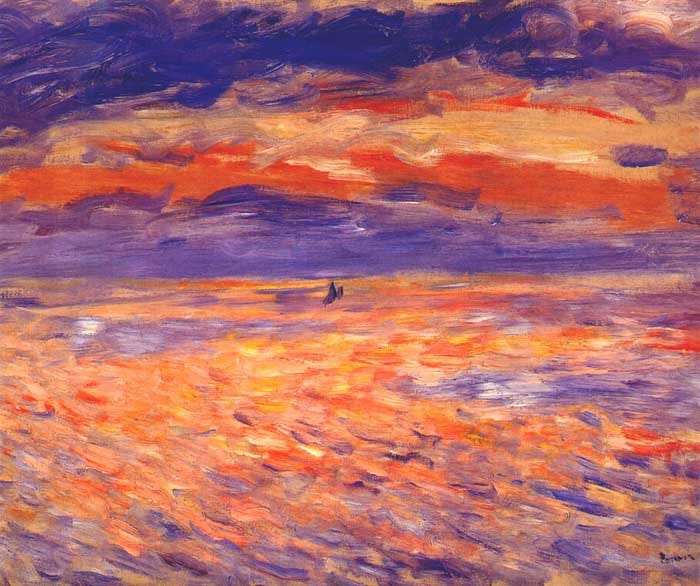
On we walked and on I drunk that sundance, as we spilled into a meadow that extended beyond the horizon, where the sun could be found fulfilling its retreat. As the last rays of light crept beyond sight, I soon sobered and thoughts that had been troubling me, now fully fermented, finally flung from my tongue.
“You’ve shown me how to feel what is real; taste and speak what is real; hear, smell, and see what is real. But you never answered my first question: Where are we? What is this place?”
Tenderly, he replied, “It has been streaming through you since you first woke. Allow me to help you remember. This realm we’ve been walking on is a body, a face. But not just any face. Don’t you see? You noticed its shifting expressions long ago, to you it seemed familiar, because this, my child, is your face.”
The sun withdrew the last gauzy veils of her train, and in the folds left fluttering behind her, the first stars began to glimmer.
“The land we walked upon was your skin; that cavern, your mouth; that well, that mountain, those lakes—your ear, your nose, your eyes. And as we’ve travelled, so these sensory streams have merged and gathered, outpouring into this enchanted field. And this—this flowing field of experience we now find ourselves in—is your mind.”
The rising moon shone upon the meadow, its grasses swaying in silverish silence.
“You mean to tell me that, all along, we’ve been strolling about on my face? That this field is a field of…of…me?” I murmured.
“Experience has a funny way of folding in on itself, doesn’t it?” he mused.
A cricket chirped gently.
I sputtered, “You’ve claimed to show me how to experience what is real, and with fidelity I have followed. But I now fear I can follow no longer, for how could any of this be real? What is reality, really?”
He sang, “What you encountered today. Your senses, your mind, they lay draped upon her heaving bosom, evernursed by her wonders, evermade anew, everbecoming. And in those calm hours when we surface for breath, wiping the dribble from our mouths, so descends on us the following question: From what divine source does this all spring?
“Today, we traversed your face, your senses. Now, we converse in your mind. It could be no other way: it has to be you, for this divine source seeks itself through you, needing you to fulfill itself, and, by virtue of you becoming through its divinity, you, like it, thus seek yourself through its divine source. So, my child, rest assured that reality is what you experience. As we speak, we are steeped in its burning layers. But this actuality you perceive is merely one blazing petal of an everblooming potentiality.”
Supremely, the star-splashed sky sparkled.
Bewildered, I thirsted for more, “You’ve shown me that delight depends on difficulty, sweetness on bitterness, joy on sorrow, life on death, light on dark. Please, tell me, does this not imply that all merely balances, that here we find ourselves adrift in a neutral abyss?”
Peaceful, he poured, “You are right to notice that the many blend into one. But our descriptions can reveal only one side of this stone at a time: its top all sunbathed, smooth, and pure; or its bottom encrusted with soil and crawling with critters.
“Though you claim there is balance, but answer me this: Who holds the scale? It seems to me that a most mighty imbalance, a most mighty assymetry, a most mighty miracle has slithered by you unawares: that this field of experience exists at all, and that it all unfolds and overflows, drawn to fulfillment, enfolding with the love of the Lover who embraces us in this field.
“Listen closely, my child, for here comes the crux. Activity that creates fruitful activity, becoming that begets becoming, tending towards the infinite and eternal, many believe to be Good; conversely, activity which leads to inactivity, tending towards the finite, the absence of being—uncreation, unreality, unbecoming—many believe to be Evil. They may call this Evil if they wish, and so may you. But all we may truly access is the vast affirmative, Being, and the vast affirming, Becoming, which stand alone without true opposites, for how could non-being stand if it does not exist?
“If you believe this vast affirmative to be Good, the larger unbecomings you see are, more fundamentally, smaller becomings that (and this is what truly pains us) could be more. But, you might ask, could there not still remain an Evil existing separate from this Good, rising in place of these sinking becomings? Perhaps, but wouldn’t we be mistaken to consider absence, or a supposed rise in absence, as something that exists—would this not be a grasping of shadows? For with what hands would you grab nothing, and with what hands would nothing work? Would we not be wiser to throw up our hands and admit that nothing can be said about nothing?
“And yet we so liberally apply the label ‘Evil’ to whatever makes us uncomfortable, tempted by cowardice to withhold our love. Why? Because that most mighty miracle slithers on, mysteriously coiling, resting its head gently on its folds, and striking fear in us with those beady eyes. To this the deluded point proudly, ‘Look! Look at that horrible Evil that stares at us so!’ Off they flee! But you, holding faith in the Good, will approach, trembling, towards that head now bearing its fangs, and carefully, skillfully—you will snatch that mighty head! Tenderly, you will milk a most venomous contradiction from those fangs and, little by little, drink it, resolve it within your love, and so you will brew the most-potent antivenom: the anti-contradiction that all is one, that all is many, that all is Good—that buried beneath every so-called evil, every so-called unbecoming, remains a becoming ever-so-sweet and ever-so-tender, yet everharder to find, evermore in need of your attention, and evermore worthy of your love. It is, my child, through this humble reconciling of that which conflicts that we come to know what is real, and it is love, the everbecoming of Good, that enables us to do so.
“But this,” he concluded, “this is a matter of belief, my child, a matter of disposition. Whether you find truth in all of this is up to you.”
The ground, warm and soft beneath my feet, throbbed alongside my heart’s tender beat.
“…Who are you?” I asked.
“You need no name to know who I am.”
With those last strange words, his form faded and fell, absorbed by the sparkling sky. Sleep now weighed on my eyes, lulling me into that strange nameless realm, which I know so little and know so well.